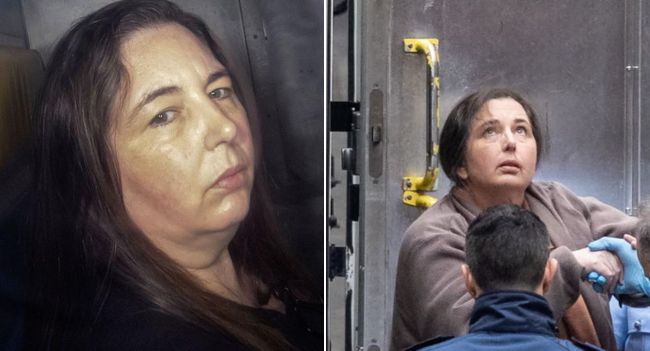
Erin Patterson will spend the rest of her life in prison after a Victorian appeal court dismissed her challenge against her murder convictions and increased her sentence to life imprisonment without the possibility of parole.
On Friday, October 30, three Supreme Court of Victoria appeal judges — Justices Stephen McLeish, Lesley Taylor and Peter Kidd — rejected Patterson’s appeal and upheld her convictions for murdering Don Patterson, Gail Patterson and Gail’s sister, Heather Wilkinson.
The judges also accepted the prosecution’s argument that the original sentence was too lenient. Patterson had been given a 33-year non-parole period by Justice Christopher Beale in September 2025. The appeal court overturned that provision, ruling that she should serve life behind bars.
Patterson appeared at the hearing by video link, wearing a blue prison-issued jumper and glasses. She showed little visible emotion as the decision was delivered.
Her legal team has indicated that she intends to take the case to the High Court, the final avenue available to challenge her conviction and sentence.

Erin Patterson will likely die behind bars alone after her desperate attempt to appeal her conviction failed
Three Victims Died After Poisoned Beef Wellington Lunch
Patterson was convicted of murdering Don and Gail Patterson and Heather Wilkinson after serving them beef Wellington containing deadly death cap mushrooms at her home in Leongatha, Victoria, on July 29, 2023.
Pastor Ian Wilkinson, Heather’s husband, also became critically ill after the meal but survived. Patterson was convicted of attempting to murder him.
The case attracted international attention because of the nature of the poisoning and the circumstances surrounding the family lunch.
The new sentence makes Patterson only the second woman in Australian history to receive life imprisonment without parole. The first was Katherine Knight, who was sentenced in 2001 for murdering her partner, John Price.

Don and Gail Patterson were killed by Erin Patterson

Heather Wilkinson was also murdered atthe deadly lunch

Victoria’s Director of Public Prosecutions, Brendan Kissane KC leaves court on Friday after securing Patterson’s life behind bars
Judges Reject Patterson’s Challenge to Her Convictions
Patterson appealed her convictions on seven grounds, arguing that errors during the trial had caused a substantial miscarriage of justice and that the verdicts should be quashed.
A central part of her case concerned the decision to house the sequestered jury at the same hotel as police officers and members of the prosecution team during deliberations.
Her barrister, Richard Edney, had described the arrangements as a “catastrophic failure” and argued that the jury’s proximity to people involved in the case created a risk that the verdicts had been improperly influenced.
However, the appeal judges found no basis for the argument.

Patterson had black plastic erected outside her home to hide her from media in anticipation of her return in July last year

Patterson at the conclusion of her interview with Detective Leading Senior Constable Stephen Eppingstall
The prosecution, led by Director of Public Prosecutions Brendan Kissane KC, maintained that there was no evidence the jury had been compromised. Kissane argued that the arrangements had not undermined the trial process and that the defence had been aware of potential concerns at the time.
Justice Peter Kidd responded briefly to Edney’s description of the arrangements, asking: “So what?”
Justice Lesley Taylor also pointed out that many of the complaints now being raised had already been addressed during the original trial.
“The defence counsel was very alive to the complaints that you’re now making under ground six,” she told Edney, noting that experienced trial counsel had raised most of the issues in the final address.
The judges ultimately rejected Patterson’s grounds of appeal.

Detective Leading Senior Constable Stephen Eppingstall upon leaving court on Friday. He made no comment, but his face told the story

Detective Sen-Constable Laura Colley (back left) , who was the officer who slapped the cuffs on Patterson, looked like the cat that got the cream upon the decision being handed down

Patterson’s only supporter Ali Rose Porter was mobbed by reporters outside court in Morwell at Patterson’s verdict
Dispute Over Evidence and Prosecutor’s Closing Address
Patterson also challenged the handling of several categories of evidence during her trial.
These included mobile phone tower data linked to sightings of death cap mushrooms, Facebook messages, evidence from people described as her friends, and photographs and videos of mushrooms found on an SD card. She argued that some material had been wrongly admitted while other evidence that could have supported her claims about foraging had been excluded.

Patterson’s barristers Sophie Stafford and Colin Mandy, SC in Morwell during the epic trial

Lawyer Bill Doogue (right) had complained about Patterson’s jury being briefly housed alongside police, prosecutors and reporters
She further argued that her cross-examination by the prosecution had been unfair and oppressive, and that the prosecutor’s closing address contained errors and improperly suggested she had a motive to kill.
Her appeal lawyers raised 35 complaints about the prosecution’s closing submissions.
However, the appeal judges noted that the defence had already challenged many of those points during the original proceedings. The court was not persuaded that they justified overturning the convictions.
Prosecution Argues Original Sentence Was Too Lenient

Simon Patterson has vanished from the spotlight, but is expected to release his memoir now the appeal is over

Pastor Ian Wilkinson told Patterson: ‘I am no longer Erin Patterson’s victim. She has become the victim of my kindness.’
The prosecution had also appealed Justice Beale’s decision to set a 33-year non-parole period.
Kissane argued that the judge should not have fixed any period after which Patterson could apply for parole. Alternatively, he submitted that 33 years was manifestly inadequate given the seriousness of the crimes.
Under the original sentence, Patterson would have been 81 before becoming eligible to seek parole.
The prosecution also challenged the use of prison conditions as a factor in determining the non-parole period, arguing that this was legally and factually flawed.
The appeal judges agreed that it had been inappropriate for Justice Beale to set a non-parole period. Patterson’s sentence was therefore increased to life without parole.
Patterson Expected to Return to Restrictive Prison Unit

The Patterson trial will be Crown prosecutor Dr Nanette Rogers’ last major trial
Following the decision, Patterson is expected to return to the Dame Phyllis Frost Centre, where she has been held under restrictive conditions because of the notoriety of her crimes and concerns for her safety.
She is reportedly housed in the prison’s Gordon Unit, where she spends much of the day in near-solitary confinement.
Her routine has included crocheting, watching television, using a computer and reading books or magazines. Reports have described her as spending up to 23 hours a day in her cell, which has a small attached courtyard.
She has limited contact with other inmates and is escorted by two officers when moved around the prison.
The restrictions are understood to be intended to protect her from potential threats within the prison.
Ian Wilkinson’s Words of Forgiveness
The appeal decision may bring some relief to the surviving victims and their families after years of legal proceedings.
Ian Wilkinson attended much of Patterson’s ten-week trial in Morwell in 2025 and was also present during the appeal process.
At a pre-sentence hearing, he condemned what he described as Patterson’s “callous and calculated disregard” for people who had approached her with good intentions.
He also spoke about forgiveness, making clear that his offer applied to the harm done to him personally, not to the murders of his wife, Heather, and the Pattersons.
Wilkinson urged Patterson to accept his forgiveness through a full confession and genuine repentance. He said he bore her no ill will and hoped she would use her time in prison to become a better person.
“I am no longer Erin Patterson’s victim. She has become the victim of my kindness,” he said.
His words stood in stark contrast to the severity of the crimes and the devastating loss suffered by the families.
Simon Patterson’s Allegations May Feature in Long-Awaited Memoir
Patterson’s former husband, Simon Patterson, has largely stayed out of the public eye since the trial. He previously alleged that she had tried to poison him on several occasions between 2021 and 2022.
He claimed that he became seriously ill after eating meals she had prepared, including penne bolognese, chicken korma, beef stew and a curry wrap.
According to his account, one episode left him in a medically induced coma for more than two weeks and required emergency bowel surgery.
Police investigated the incidents and charged Patterson with three counts of attempted murder. Investigators also noted research on her devices relating to barium carbonate, a rat poison, around the time of one of his illnesses.
However, no specific poison was forensically confirmed, and the charges were discontinued before the mushroom murder trial. They were never put before a jury.
In April, it emerged that Simon Patterson had agreed to write a memoir with a publisher. With the appeal now concluded, the book is expected to move forward.
Investigation and Trial Officials See Case Reach Another Milestone
Detective Leading Senior Constable Stephen Eppingstall, who formally took over the investigation around August 3, 2023, attended the proceedings and left court without comment.
He had been involved throughout the pre-trial process, the original trial and the appeal. During the trial, he gave extensive evidence as the Crown’s final key witness and was cross-examined by the defence.
Eppingstall also conducted Patterson’s first formal police interview on August 5, 2023, during which she denied owning a dehydrator or foraging for mushrooms.
Detective Senior Constable Laura Colley, the officer who arrested Patterson, was also present when the appeal decision was handed down.
Crown prosecutor Dr Nanette Rogers, who questioned Patterson extensively during the original trial, is reportedly nearing the end of her career as a Victorian prosecutor.
The conclusion of the appeal marks a major turning point in one of Australia’s most closely followed criminal cases. Although Patterson’s lawyers have signalled a possible High Court challenge, the latest ruling means she is currently facing the prospect of spending the remainder of her life behind bars.