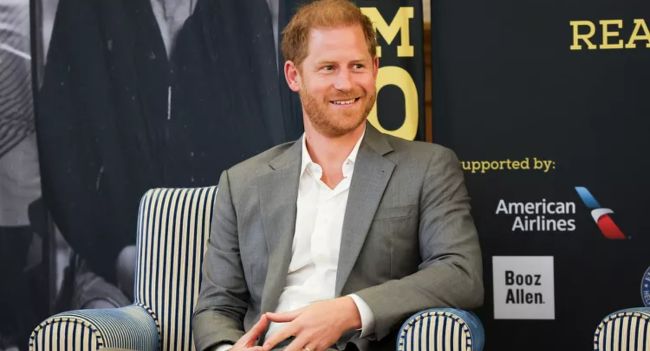
The Duke of Sussex, 41, recently spent time in the U.K. promoting the 2027 games in Birmingham
:max_bytes(150000):strip_icc():focal(773x202:775x204):format(webp)/prince-harry-the-duke-of-sussex-the-invictus-games-foundation-conversation-realising-a-global-community-050724-8-8d7154e077074f9c961f0e1a6557b84d.jpg)
NEED TO KNOW
- Prince Harry’s dedication to the Invictus Games continues despite personal challenges and a busy schedule, his friends exclusively tell PEOPLE
- Birmingham holds deep significance for many Invictus athletes as a key location in their recovery journeys, three former servicemen say
- The Invictus Games have expanded globally, transforming perceptions of disability and veteran recovery in 26 countries, largely thanks to Harry’s own brand of “sparkle and magic”
Prince Harry brings his own brand of “sparkle and magic” to any Invictus Games gathering, his colleagues and friends exclusively tell PEOPLE.
David Wiseman, a leading light in the Invictus movement and former serviceman, tells PEOPLE that Harry’s importance to the games cannot be underestimated. He also notes that the Duke of Sussex’s focus on the games during his U.K. trip in recent days came despite obvious distractions, including a crushing legal defeat, controversies over where he would stay and security fears for his family.
“Bearing in mind how much he’s got going on in different facets of his life, he’s showing how dedicated he is to the Invictus movement,” Wiseman says.
“[Harry’s] committed so much of his time and energy to the Invictus Games Foundation, events and everything that’s building towards the games in 2027,” Wiseman — who heads up the international department of the Foundation and accompanies Harry on some of his overseas trips to Ukraine and Nigeria — tells PEOPLE.
“These aren’t small things — they take up quite a lot of bandwidth, and we’re incredibly grateful that he’s so committed, so dedicated, so passionate about the Invictus movement,” he says.
:max_bytes(150000):strip_icc():focal(683x391:685x393):format(webp)/Prince-Harry-and-Royal-Marine-veteran-JJ-Chalmers-050824-d92ffeb72bce46fd89579796250c83b6.jpg)
“I’ve said this before: he’s through and through a true leader in the international veteran community. You can see that when he’s in a room with [the veterans] he comes alive and he gets his energy from that. It’s been a distracting week for him, but I’m also positive he will have gained a lot of energy by hanging out with people with whom he has so much affinity,” he adds.
Wiseman was treated in Selly Oak Hospital in Birmingham after being shot in the chest by the Taliban in Afghanistan in 2009. It was a particularly challenging time for him as his wife was six months pregnant at the time.
:max_bytes(150000):strip_icc():focal(764x340:766x342):format(webp)/Prince-Harry-and-David-Wiseman-2-050824-5dae1065e7d345c1835a522fc1d64dd0.jpg)
“It’s not just incredible medical professionals who provided for us in our hours of need but the community too,” he says of the experience, singling out “cake lady” Kath Ryan, who baked for the veterans each day while they recovered.
Meanwhile, Head of the Birmingham games, Helen Helliwell, tells PEOPLE that Harry is much more than a patron. “He always brings sparkle and magic,” she says. “He’s a massive supporter of the armed forces community, and it’s always fantastic having him here. The wounded and sick, and the friends and family, always love having him here.”
For many of those set to compete in next year’s games, which are taking place in Birmingham, U.K., the setting couldn’t be more poignant, as the city is where they began their long road to recovery.
“In many ways, the city is the birthplace of Invictus,” former Royal Marine J.J. Chalmers exclusively tells PEOPLE.
Like scores of others, Chalmers was taken to a hospital in the city when he was medevaced from the battlefields of Afghanistan and Iraq. “The Invictus Spirit was born in Ward 412, where we were all recovering together,” he adds.
:max_bytes(150000):strip_icc():focal(1667x644:1669x646):format(webp)/Meghan-Markle-arrives-at-Invictus-091223-03-65a3b99b7f814df6a15126d5ee521f9e.jpg)
Chalmers, who took part in the cycling event at the first games in London in 2014, recalls, “When I was blown up, I closed my eyes, dying on the floor in Afghanistan. And I opened them in what seemed like a second later — it was actually a week later — 2,500 miles away in Birmingham. It took me a long time to really appreciate exactly what that place was – the most remarkable hospital, with the most remarkable staff, who were on the absolute cutting edge of keeping people who should die, alive.”
Can’t get enough of PEOPLE’s Royals coverage? Sign up for our free Royals newsletter to get the latest updates on Kate Middleton, Meghan Markle and more!
Chalmers is one of the best examples of a new life that can be created in the wake of a terrible injury and recovery. He has graduated from athlete to broadcaster, concentrating on the Paralympics, including the coverage of the Invictus Games. His second career also led him to compete on the U.K.’s version of Dancing with the Stars, Strictly Come Dancing, in 2020, with Harry recording a good luck message for him.
Dave Henson, who lost both legs in Afghanistan and was the first captain of the British team in the inaugural games, recalls, “Unfortunately, during the peak of the Afghanistan conflict, ward 412 was just full of young, very severely wounded personnel.”
Henson shares, “I was awake when my medevac flight arrived in Birmingham. I was put into the back of a civilian ambulance at Birmingham Airport, and then whizzed all the way to the QE hospital and taken into the intensive care unit. So, my experience, memory and understanding of that journey, particularly through Birmingham, is really quite complete and quite poignant.”
He adds that while his rehabilitation is “great, it will never be complete.”
“You have to continue to work at it,” he says, adding that with Harry’s “focus” on the games to ensure their “longevity,” he has more “confidence that the system will be there for the long term.”
Chalmers adds, “We have an Invictus community in 26 countries now. In Nigeria, they’re building a recovery facility called the Invictus Centre, and four years ago they didn’t even know that sports recovery existed. It’s completely changing a country’s perception of disability and veterans.”
He goes on to question, “Could any of us have dreamed that is what a sports day in London would end up being?”