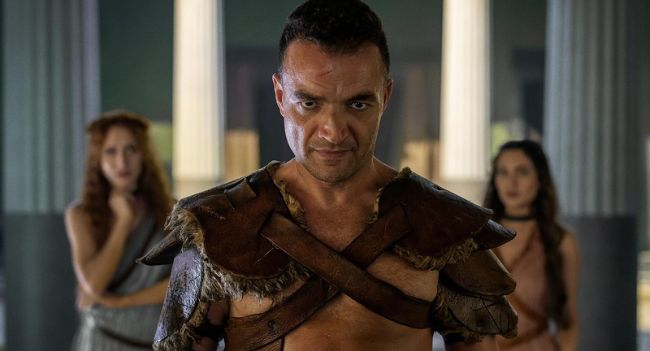
Inside Spartacus: House of Ashur: Unpacking Steven S. DeKnight’s Alternate-Timeline Roman Epic
If you look past generic marketing hype trying to package every blood-soaked sword-and-sandal revival as a standard historical retread, you are looking at Spartacus: House of Ashur, the high-octane 10-part historical drama series created by Steven S. DeKnight for Starz (and streaming via platforms like Prime Video).
The Setup: An Alternate History, the House of Batiatus, and the Arena’s New Master
Moving away from standard linear prequels or direct sequels that follow traditional paths, the narrative kicks off with a provocative “what-if” premise:
-
The Survivor’s Reward: In an alternate timeline where the treacherous villain Ashur (played by returning star Nick E. Tarabay) survived Mount Vesuvius and helped Rome crush Spartacus’s slave rebellion, he receives the ultimate prize: ownership of the infamous ludus (gladiator training school) once belonging to Batiatus.
-
Navigating Roman Elites: Eager to carve out respect and power in a society that still views him as an outsider, Ashur must manage the treacherous political waters of Roman patricians, ambitious politicians, and the impending arrival of heavyweights like Marcus Crassus.
-
Revolutionizing the Spectacle: To shock the elite and defy traditional Roman expectations, Ashur introduces groundbreaking and controversial spectacles to the arena—most notably championing groundbreaking gladiators like the fierce warrior Achillia (played by Tenika Davis).

Key Cast & Creative Approach
-
Graham McTavish and Tenika Davis: McTavish brings his signature gravitas and imposing physical presence to the role of Korris, a cornerstone figure within the training halls, while Tenika Davis commands the screen as Achillia, driving the narrative’s central themes of strength, autonomy, and survival.
-
The Signature Spartacus Aesthetic: True to the legacy of the original 2010 hit series, the production leans unapologetically into stylized slow-motion combat, lavish period set design, heavy political intrigue, and plenty of raw, high-stakes melodrama.
-
Bending Historical Expectations: Rather than playing it safe, the 10-episode arc uses its counter-factual timeline to deconstruct power, corruption, and the cyclical nature of slavery and ambition in the shadow of the Roman Republic.

The Verdict
While promotional streaming blurbs love to toss around breathless buzzwords like “erotic history-bending roller-coaster,” Spartacus: House of Ashur is a wildly bold, pulpy, and visually opulent return to the arena that proves alternate-history fiction can bite just as hard as the real thing.