
Emma Bradley may have been knocked out of Tipping Point after just one round, but her appearance on the ITV game show gave her an experience she enjoyed—and a behind-the-scenes look at how the popular coin-pusher programme is actually made.
Emma appeared on the show on April 21, hoping to win the £10,000 jackpot. Although her time in the competition was brief, she later opened up about everything from the application process to filming the episode and revealed that the game is played much more quickly and naturally than viewers might expect.

Tipping Point contestant Emma Bradbury (on the right) has shared her experience(Image: Emma Bradbury/Emmaand3)
Three stages before getting on Tipping Point
Writing on her blog, Emma explained that she had kept her appearance secret for around a year.
She had filmed one of the final episodes of Tipping Point before production was temporarily suspended when the first national lockdown began.
Emma had always enjoyed playing 2p machines while on holiday, which made the idea of appearing on the coin-pusher game particularly appealing.
She explained that applying for Tipping Point involves three main stages:
- An online application
- A telephone interview
- A group selection session
The same general selection process can also apply to other television quiz shows, including The Chase.
After submitting her application, Emma said a researcher contacted her within a few days. She was asked additional questions about herself, along with 10 relatively straightforward general-knowledge questions.
The next stage took place at a hotel conference room, where around 30 potential contestants had been invited.
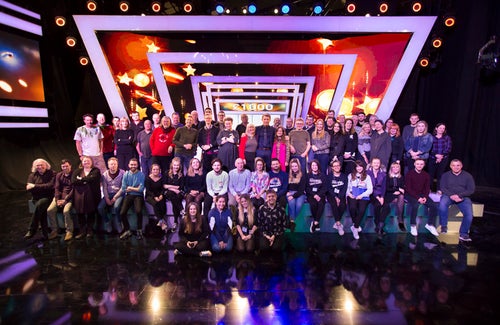
A 50-question test and five-minute talk
The applicants were first introduced to the researchers, who explained what would happen during the afternoon.
They were then given a general-knowledge test containing around 50 questions and had 20 minutes to complete it in silence.
Emma said the questions covered the sort of subjects contestants could expect to encounter on the programme. She believed she had performed reasonably well, although applicants were not given their papers back and were not told their scores.
The most unusual part of the selection process came next.
Every applicant had to stand at the front of the room and speak for five minutes about a subject of their choice. The presentations were filmed, with candidates encouraged to engage directly with the camera.
Emma chose to talk about blogging, something she felt comfortable discussing at length. She also saw it as an opportunity to mention her previous television and media experience.
Other applicants chose very different subjects, including their hobbies and careers. Some attempted to make an impression by reading poems or telling amusing stories.
Emma believed the specific subject was less important than the way candidates presented themselves.
In her view, confidence, engagement and plenty of smiling were key to showing the researchers what each person might be like on television.
After each presentation, the other applicants were encouraged to react positively, clap and offer supportive body language.
The researchers were therefore able to see how potential contestants behaved in front of an audience and camera before deciding what would happen next.

From standby contestant to the real show
Emma was initially asked whether she would be willing to act as a standby contestant—a reserve who could step in if required.
She did not have to wait long.
Around a week later, the Tipping Point team contacted her and asked whether she could act as a stand-in. Just two days after that, she was invited to film in Bristol.
By then, however, the rapidly developing coronavirus situation meant that everything was uncertain.
Emma was reminded that she could not tell people she was appearing on the programme. She was also warned that she could not discuss her experience or reveal the outcome until the episode had aired.
The day before filming, she received a final phone call telling her to arrive at 7am and explaining what clothes she should bring.
She also discovered that her status had changed.
When Emma called to confirm she was still only a standby, she was told she had actually been moved into the contestant line-up.
That meant she had little opportunity to become nervous—but equally little time to prepare.
From submitting her original application to filming the programme, the entire process had taken less than a month.
Filming during the first lockdown
At the studios, Emma was taken to a holding room, where she met the other three contestants and the standby contestant. They were given light refreshments before waiting in the green room.
The atmosphere was very different from the television productions Emma had experienced previously because the country was on the brink of lockdown.
There were relatively few staff around, and the usual hair and makeup arrangements had been scaled back because of social-distancing concerns.
Instead of the normal television hair and makeup treatment, one makeup artist briefly checked everyone and tidied them up.