When Stranger Things aired its final episode six months ago, it was the end of an era. The global phenomenon spent nearly a decade dominating the zeitgeist with its rare mix of supernatural mystery, community, lovable misfits, nostalgia, and stories that were just as interested in humanity as they were monsters. So when it ended, the inevitable question wasn’t whether viewers would miss Stranger Things. It was what, if anything, could fill the void?
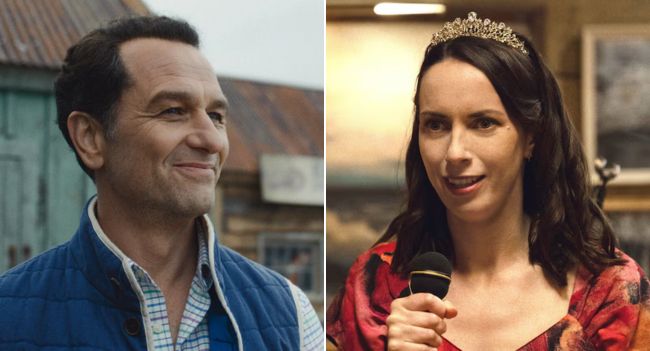
Enter Widow’s Bay. The Apple TV breakout hit has very quickly become one of the year’s most acclaimed and talked-about new series. The show certainly isn’t a carbon copy of Stranger Things and is arguably better for it. It shares many qualities that propelled Netflix’s flagship horror series into iconic status. More importantly, it may have a way to evolve that formula for a different audience.
Widow’s Bay Uniquely Captures Stranger Things Magic
One of the biggest misconceptions about Stranger Things is that the main draw and reason for mass success were the fantastical elements and unworldly creatures it brought to life. While wildly entertaining, that wasn’t solely why audiences became obsessed. People tuned in for the Demogorgons, but they stuck around for Eleven, Hopper, Harrington, the D&D crew, and the interconnectedness of their underdog story. Underneath, Stranger Things was always a story about people and bravery.
Widow’s Bay understands and executes that same ethos. Yes, there’s a mystery. Strange, possessive forces, unsettling moments, and enough lore to keep viewers theorizing each episode. But the show’s real strength is in its characters’ high stakes, everyman-to-hero arc, and the complicated web that connects them all.
The supernatural gives the story pace; the people give it relatability and heart. That’s a balance many shows go for, and few achieve in such a poignant way.
Horror is difficult. Comedy is difficult. Combining them effortlessly without cheapening the other is a rare feat. It’s not that Stranger Things strived for that; it was in a lane of its own that lent itself to little comic relief. Widow’s Bay, on the other hand, consistently threads that needle.
One minute, viewers are watching through fingers, terrified for their lives. Next, they’re belly-laughing at the dry, at times slapstick, humor. The respective humor and darkness only make the other more potent.
That ability to be funny, quirky, a little charming, and genuinely frightening simultaneously is impressive. Many modern horror shows lean so heavily into dread that they become emotionally taxing. Others embrace quirkiness so much that the stakes disappear. Widow’s Bay is that camp counselor telling a vivid ghost story around a campfire while also being hilarious.
Widow’s Bay Feels Like Stranger Things All Grown Up

Comparisons to Stranger Things are a plenty, yet a big differentiator is how Widow’s Bay feels aimed at a more grown-up audience. And the cast doesn’t disagree. In May, Matthew Rhys and his co-stars got a kick out of the “adult Stranger Things” comparison and even validated it. Stranger Things, exploring adolescence, friendship, and identity, was both a blast from the past for adults and a relevant coming-of-age saga for younger generations.
Widow’s Bay presents older, deeper wounds and stories. Its characters aren’t figuring out who they are; they’re reconciling with their past and who they’ve become. The show explores regret, grief, secrets, baggage, and the lingering consequences of decisions. The emotional stakes feel more mature and lived-in, versus exploratory and innocent, even while immersed in the supernatural.
Widow’s Bay feels familiar because of the way audiences engage with it. Waiting patiently between episodes, guessing at theories, spotting hidden details, and engaging in discussions have become part of the communal experience. It’s comforting in an era otherwise fragmented by countless streaming platforms.
Stranger Things was one of the last shows capable of building online camaraderie and dominating conversation for weeks on end. Widow’s Bay has already tapped into a similar dynamic. Viewers aren’t passively watching episodes. They’re invested. That’s often the sign of something special: transforming viewers into eager participants.
Widow’s Bay Could Have an Advantage

Perhaps the most interesting comparison between the two involves prestige awards recognition. Of course, audiences take this with a grain of salt (as they should). But it’s worth noting. Stranger Things was incredibly successful with critics and audiences alike, earning multiple Emmy wins and nominations throughout its run. Yet it occasionally found itself competing with household dramas perceived as more traditionally “serious.”
Maybe Widow’s Bay is better positioned to bridge that gap. Its layered themes, performances, dark comedy, and character-driven storytelling align with the qualities that awards voters often gravitate toward. The show keeps its integrity within its mixed genre and packages it in a way that feels distinctly prestige-oriented.
No awards are guaranteed. But if there is a genre show positioned to capture both passionate fandom and impressive industry recognition, Katie Dippold’s series has made a compelling case for itself thus far.
Some shows are once-in-a-lifetime. Stranger Things was that lightning (literally) in a bottle. It was the right messenger, with the right message, at the right time, when the audience it was aimed at needed it most. Expecting another show to replicate that experience, especially so soon, is pointless. When art is great, there’s room for everyone. And that’s the point.
Six months after Stranger Things concluded, Widow’s Bay has emerged with its own unique stamp on TV, as the strongest candidate yet to capture part of that audience’s hearts and minds. It understands and delivers the value of mystery, community, and emotional investment. It knows how to be terrifying without becoming unrelenting and funny without becoming indulgent.
Most importantly, it knows that viewers may come for the supernatural spectacle, but they’ll stay for the story. That’s exactly what made Stranger Things so special, and exactly why Widow’s Bay may very well be next in line as television’s new obsession.