“Real Love”: When The Beatles Gathered One Last Time

“Real Love”: When The Beatles Gathered One Last Time
On March 4, 1996, something almost unthinkable slipped quietly into the world. Without fanfare or spectacle, a new Beatles single appeared on radios and record shelves—Real Love. It was not a reunion in the traditional sense, nor a technological stunt designed to resurrect the past. Instead, it was something far rarer: a final act of listening.
The song began its journey decades earlier as a simple home demo recorded by John Lennon in the late 1970s. His voice, intimate and unguarded, floated above a faint piano—unfinished, vulnerable, unmistakably human. For years, it remained just that: a fragment of a life cut short. But in 1995, as work began on The Beatles Anthology, Paul McCartney, George Harrison, and Ringo Starr decided to return to it, not to rewrite history, but to sit beside it.

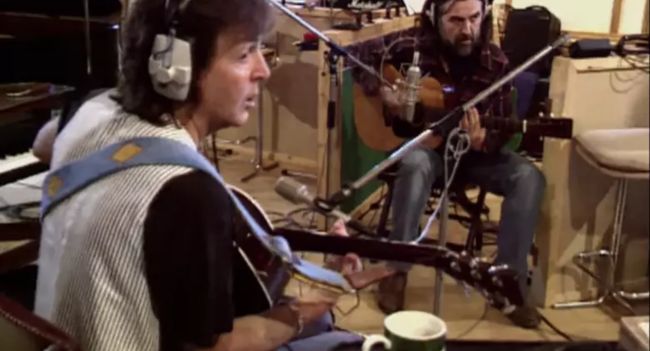
At Paul’s studio in Sussex, the three surviving Beatles approached John’s recording with restraint and care. The goal was never to polish away its imperfections. The hiss, the fragility, even the sense of distance in John’s voice were treated as part of its truth. Rather than placing themselves over him, Paul, George, and Ringo built around him—adding guitar lines, harmonies, and rhythm as if John had simply stepped out of the room and was about to return.
The atmosphere during the sessions was quietly complex. There was laughter, familiar banter, and moments of ease that echoed their shared past. But there was also an absence that could not be ignored. John’s voice emerging from the speakers was not eerie or artificial; it felt like memory made audible. It reminded them not only of what they had been together, but of what could never be again.
Ringo later described the process as natural, even joyful, though emotion surfaced unexpectedly. Some moments lingered in silence between takes, heavy but not unbearable. These were not sessions driven by ambition or expectation. They were guided by affection.
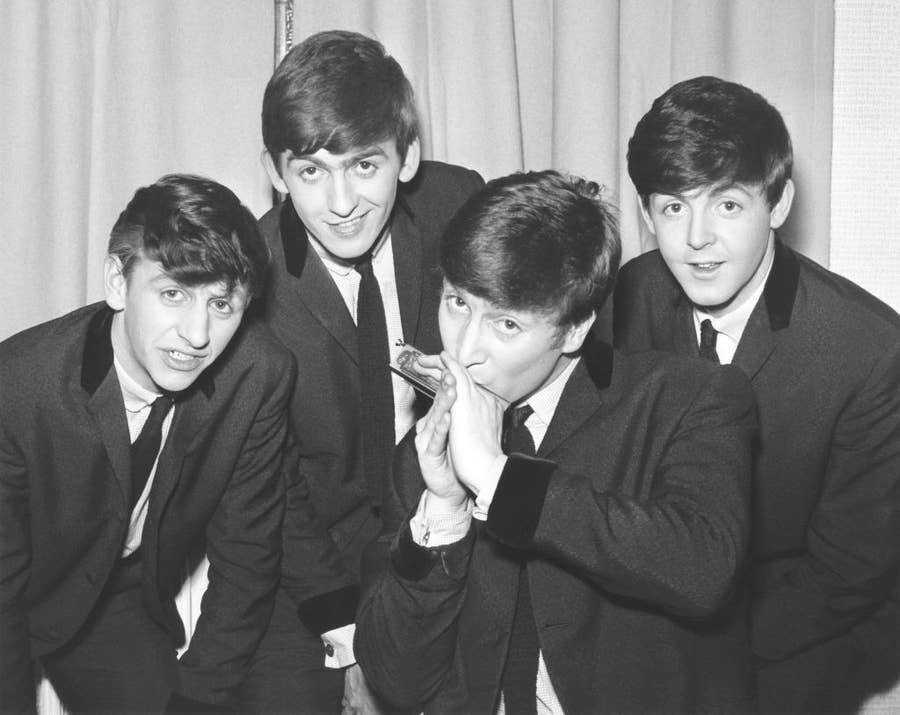
When Real Love was released, its significance went far beyond chart positions or radio play. For listeners, it offered one last glimpse of a sound that had shaped generations—familiar, but tinged with finality. For Paul, George, and Ringo, it was a closing gesture. Not a grand statement, not an attempt to reclaim youth or rewrite legacy, but an honest acknowledgment of everything they had shared.
Ringo would later sum it up with disarming clarity: this was the end of the line. The last time The Beatles could speak as a group.
Yet there was nothing bleak about that ending. In Real Love, they managed to transform loss into something gentle and enduring. They took memory, friendship, and grief, and shaped them into music—proving, one final time, that love, when handled with care, does not fade. It waits. And sometimes, if listened to closely enough, it finds its way back into the world.