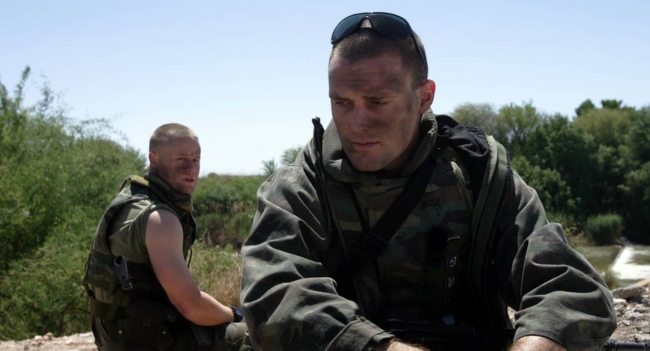
Generation Kill: The Unflinching Iraq War Drama Still Ranked Alongside Band of Brothers

Nearly two decades after its original HBO debut, Generation Kill continues to stand apart from conventional war dramas. The seven-part miniseries, which follows U.S. Marines during the opening phase of the 2003 Iraq War, has retained a reputation for realism, complex characters and its refusal to turn modern combat into a straightforward story of heroism.
The series is currently available to stream in the UK on NOW, where all seven episodes are listed as part of its Entertainment & HBO Max offering.
For viewers who admire Band of Brothers and The Pacific, Generation Kill offers something markedly different. Instead of revisiting the Second World War, it focuses on a far more recent conflict and places audiences alongside Marines dealing not only with combat, but also shortages, confusing orders, bureaucracy and the uncertainty of a rapidly unfolding invasion.
Based on Evan Wright’s firsthand reporting
![Trailer [OV]](https://m.media-amazon.com/images/M/MV5BMzAyZGM1ZmItYmFkOS00Zjk1LWEzNDEtMWFhMTlkNzRhYzUxXkEyXkFqcGdeQXRyYW5zY29kZS13b3JrZmxvdw@@._V1_.jpg)
Generation Kill is based on the nonfiction work of journalist Evan Wright, who was embedded with the U.S. Marine Corps’ First Reconnaissance Battalion during the 2003 invasion of Iraq.
Rather than observing the conflict from a distance, Wright travelled with the Marines as they advanced through Iraq. That proximity gave his account an unusually intimate perspective on the personalities, conversations and frustrations inside the unit.
HBO describes the seven-part miniseries as covering the first 40 days of the Iraq War through the experiences of an elite group of U.S. Marines.
The adaptation preserves that ground-level approach. The broader geopolitical conflict remains present, but much of the drama comes from what happens inside the vehicles and among the Marines themselves: long periods of waiting, abrupt changes in orders, dark humor, strained leadership and uncertainty over what may happen next.
That emphasis helps explain why the series can feel less like a traditional Hollywood war production and more like being embedded alongside the unit.
A very different portrait of modern warfare
The central figures belong to First Recon as it moves toward Baghdad during the opening weeks of the invasion.
The series does not present their experience as a clean progression from one heroic battle to another. Instead, inadequate supplies, poor communication and bureaucratic problems repeatedly become part of the story. Rotten Tomatoes similarly summarizes the series around First Recon’s struggle with those problems as it leads the push toward Baghdad.
The result is deliberately uncomfortable at times. Humor can appear alongside fear and frustration, while moments of intense action are followed by confusion or reflection.
There is little interest in simplifying the Marines into conventional screen heroes. They argue, joke, complain, question decisions and try to understand situations that can change almost without warning.
That messiness is fundamental to what Generation Kill is trying to portray.
From the creative team behind The Wire
Another reason for the series’ enduring reputation is the talent behind it.
David Simon and Ed Burns, closely associated with HBO’s acclaimed The Wire, served as executive producers on Generation Kill.
The connection is apparent in the production’s attention to institutions, hierarchy and human behavior. Rather than constantly explaining military terminology or simplifying the chain of command for the audience, the series frequently drops viewers directly into the Marines’ world and expects them to keep up.
That approach can make the opening episodes demanding, but it also contributes to the sense of immersion.
The storytelling is interested not simply in what happens during combat, but in how an enormous institution functions under pressure — and what happens when the people carrying out orders begin confronting the consequences of decisions made above them.
Alexander Skarsgård among an ensemble cast
The ensemble includes Alexander Skarsgård as Sgt. Brad “Iceman” Colbert, alongside James Ransone, Lee Tergesen, Billy Lush, Rey Valentin and Jon Huertas.
Rather than building the entire series around one conventional protagonist, Generation Kill allows the personalities within the unit to emerge gradually.
Skarsgård’s Colbert becomes one of its most memorable figures, but the wider ensemble is crucial. Different Marines react to leadership, danger and uncertainty in very different ways, giving the series a broader perspective on the same experience.
That ensemble approach also reinforces the documentary-like quality inherited from Wright’s reporting.
Why comparisons with Band of Brothers persist

Generation Kill is frequently discussed alongside HBO war dramas such as Band of Brothers and The Pacific, but the similarities only go so far.
All three place considerable emphasis on the experiences of soldiers rather than treating warfare purely as spectacle. Yet Generation Kill’s setting gives it a distinctly different atmosphere.
There is no historical distance separating its characters from contemporary audiences in the way there is with Second World War dramas. Its communications technology, military culture, language and political context belong to a recognizably modern world.
It also resists the more traditional narrative rhythms associated with the genre. The Marines can spend long stretches travelling, waiting or attempting to understand contradictory circumstances before suddenly finding themselves in danger.
The structure helps make the uncertainty itself part of the experience.
Critical reputation remains strong
Generation Kill originally premiered on HBO on July 13, 2008. Today, Rotten Tomatoes lists the miniseries at an 86% critics score and a 92% audience score. Its critics’ consensus praises the production’s visceral depiction of war alongside its controlled storytelling and attention to period detail.
Those numbers help explain why the series continues to resurface whenever viewers debate the strongest war dramas made for television.
Its reputation is not based simply on battle sequences. The dialogue, ensemble performances and painstaking attention to the everyday experience of deployment are equally important.
The final episodes continue that approach as First Recon reaches Baghdad and the Marines begin reflecting on what they have experienced.
Seven episodes, one uncompromising journey
Generation Kill is relatively compact. Its story unfolds across seven episodes rather than multiple seasons, following First Recon from preparations for the invasion through its eventual arrival in Baghdad.
That makes it an accessible commitment for viewers looking for a substantial war drama without beginning a long-running series.
But its greatest strength may be what it refuses to do.
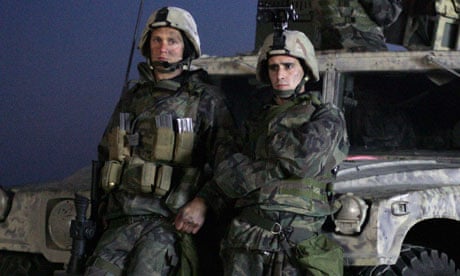
Generation Kill does not attempt to make warfare neat, glamorous or easily understood. It concentrates instead on the people inside the Humvees — their humor, exhaustion, arguments, professionalism, mistakes and growing awareness of the conflict surrounding them.
Almost 20 years after its premiere, that uncompromising perspective remains the reason the miniseries continues to be mentioned in the same conversations as some of television’s most celebrated war dramas.
Generation Kill is currently streaming on NOW in the UK.
video below